
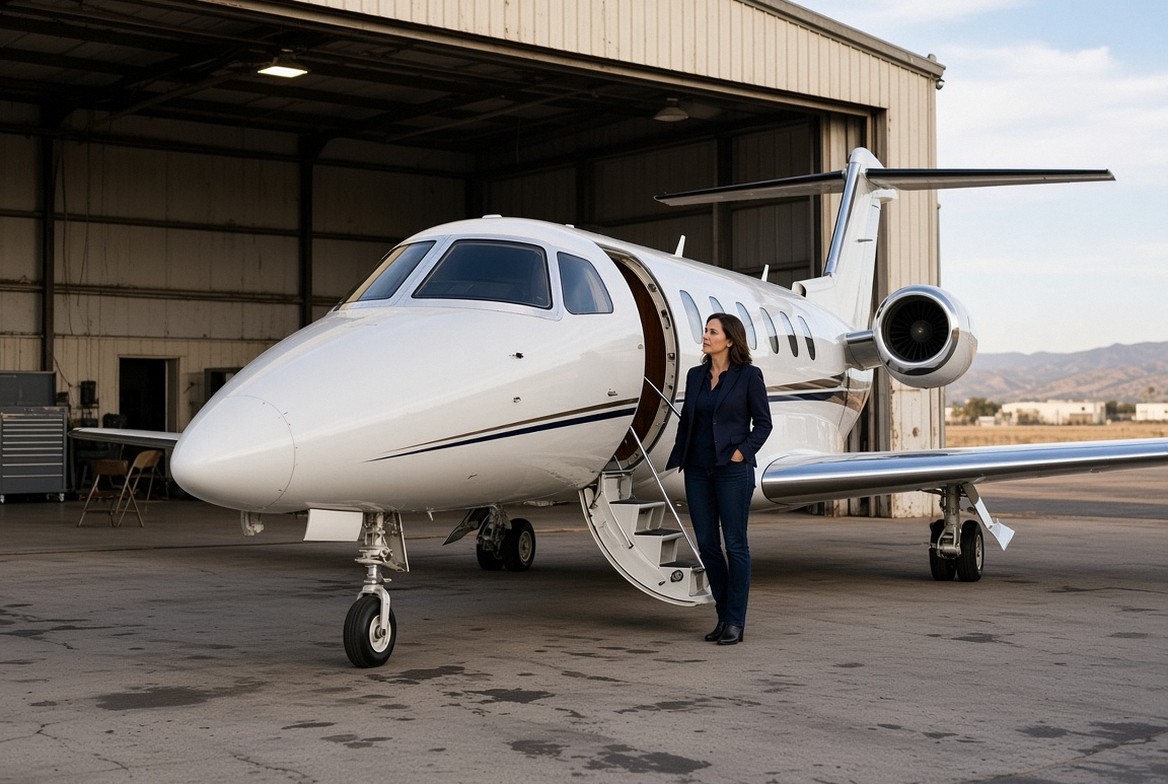
Private jet cost of ownership splits into fixed costs you pay whether the aircraft flies or not and variable costs that rise with every hour flown, with depreciation sitting on top of both, and the specific airframe you buy can move every one of those lines before you fly it once. Most owners know the categories. Where budgets go wrong is in the details of a particular aircraft: what comes due in the first few years, what the engines are enrolled in, and how many hours you will really fly.
Our aircraft acquisition service builds that analysis into the search, so the aircraft on your shortlist fit both your missions and your full budget. This guide covers where the numbers move and what to check before an offer. Actual figures vary widely by model, age, operation and location, so treat it as a framework for questions, not a quote.
Fixed Costs: Where the Variation Is
Hangar, insurance, crew, management, subscriptions and financing are familiar lines. The useful questions are the ones that change the number for your aircraft:
- Hangar: availability at your preferred field, and whether a nearby airport changes the cost or the wait.
- Insurance: for an owner-pilot moving up in class, underwriters’ experience and training requirements can shape which aircraft makes sense. We introduce buyers to a trusted aviation insurance partner early, before the shortlist is final.
- Crew: whether the aircraft will be crewed, owner-flown, or owner-flown with a second pilot, and what recurrent training that implies.
- Management: what is included in the fee, and whether it brings purchasing or fuel arrangements that offset part of it.
- Subscriptions: databases, connectivity and tracking software tied to the specific avionics fit. They add up, and they differ between two examples of the same model.
- Financing: through our NAFA membership we can connect buyers with aviation lenders. Terms are set by the lender, not by us.
Variable Costs: Read the Airframe, Not the Average
 Fuel, maintenance reserves, engine programs and trip fees scale with hours and cycles. The averages are easy to find. What matters at purchase is where this aircraft sits:
- Upcoming inspections: an aircraft with a major inspection due shortly after closing carries that cost into your first year. It belongs in the price negotiation, not in your reserve.
- Engine program status: enrolled, not enrolled, or enrolled on terms that change at transfer. An unenrolled engine can mean a buy-in to join a program, or a larger overhaul exposure if you stay out of one.
- Life-limited parts and recurring items: what comes due in your planned ownership period, given your expected hours.
- Trip profile: landing, handling and de-icing fees depend on where you actually fly, so build them from your trip history.
Fixed vs. Variable Costs at a Glance
| Category | Type | Main driver |
|---|---|---|
| Hangar | Fixed | Airport, aircraft size |
| Insurance | Fixed | Aircraft value, pilot experience, operation |
| Crew salaries and training | Fixed | Crewed vs. owner-flown, number of pilots |
| Management | Fixed | Scope of services |
| Subscriptions and databases | Fixed | Avionics, connectivity, software |
| Financing | Fixed | Loan amount and terms |
| Fuel | Variable | Hours flown, aircraft size, fuel prices |
| Maintenance reserves | Variable | Hours and cycles flown |
| Engine programs | Variable | Engine hours |
| Landing and handling fees | Variable | Number of trips, airports used |
Depreciation and Residual Value
Depreciation is often the largest cost of ownership, and it never shows up on a monthly invoice. A jet’s value moves with the market and with age, total time and cycles, avionics, maintenance status, engine program enrollment and damage history. Models with large fleets, steady demand and good support tend to hold value better.
You cannot control the market, but you can influence your exit. The entry price is the first lever, which is why we spend so much of an acquisition on comparables; read how to avoid overpaying for a business jet before you make an offer. After that, program enrollment, complete records and upgrades chosen with resale in mind do the most. Our valuation and advisory service helps owners see where an aircraft stands today and how upgrades or timing would affect its value at sale.
How Utilization Changes Private Jet Cost of Ownership
 Fixed costs are spread across every hour you fly, so a heavily used aircraft carries a smaller share of hangar, insurance, crew and financing per hour, while an occasionally used one becomes expensive per hour even though its annual bill is lower. Variable costs stay roughly constant per hour and grow in step with utilization.
The common mistake is planning on the hours you hope to fly rather than the hours you have flown. When you compare ownership with charter, jet cards or a fractional program, use your trip history from the last year or two. An aircraft that sits much of the year can still make sense for privacy, flexibility or availability, but it should be a deliberate choice made with the real per-hour number in front of you.
Taxes Need a Tax Advisor
Sales and use tax, depreciation rules and how business use is documented can all affect the economics, and the answers depend on your situation and where the aircraft is based and used. Arcadia Jets is not a tax advisor. We work alongside aviation tax consultants and recommend that every buyer review the structure with a qualified tax advisor and aviation counsel before closing, because some of those decisions are hard to change afterward.
Frequently Asked Questions
Should an inspection coming due after closing change my offer?
Usually, yes. A known event in your first year of ownership is part of the aircraft’s value. We price it into the comparison and the negotiation rather than leaving it for your maintenance budget.
Is an aircraft without an engine program a bargain or a trap?
It can be either. The answer depends on engine times, the cost and terms of enrolling, and how you plan to fly and exit. We work through those numbers before you commit to a price.
How do I estimate private jet cost of ownership for a specific aircraft?
Start with your actual annual hours and trips, then build a budget for that specific airframe, including its inspection status, engine program terms and avionics. We assemble those inputs as part of the search.
Does a lower purchase price always mean a lower cost of ownership?
No. A cheaper aircraft with major maintenance due, an unenrolled engine or an avionics gap can cost more over your ownership period than a better-documented one at a higher price.
Buy With the Full Budget in View
The right jet is one you can afford to own, not just to buy. Arcadia Jets helps buyers compare aircraft on value, records, upcoming maintenance and total cost, and introduces trusted partners for financing, insurance and tax questions. Explore our aircraft acquisition services or call (888) 660-6511 to start the conversation.