
An aircraft pre-buy inspection is an independent technical and records review that a buyer orders after signing a letter of intent and before accepting the aircraft, so that airworthiness problems and hidden costs come out before the money moves. A good one combines a hands-on look at the airframe, engines and systems with a line-by-line review of the logbooks. The findings then become the basis for the final negotiation: the seller fixes the issues, credits the price, or the buyer walks away.
Because a jet or turboprop can carry six- or seven-figure surprises, the pre-buy is where buyers protect their capital. Here is how the process works, what it covers, and how to keep it from derailing an otherwise good deal.
Where the Pre-Buy Fits in the Purchase Process
Most transactions follow the same sequence:
- Letter of intent (LOI). Price, deposit, inspection location and the scope of the inspection are agreed in principle.
- Deposit into escrow. The buyer’s refundable deposit is held by an aviation escrow agent.
- Aircraft purchase agreement. The contract defines who pays for what, how discrepancies are handled and what counts as acceptance.
- Aircraft pre-buy inspection. The aircraft is flown to the agreed facility for the records review, the physical inspection and a test flight.
- Discrepancy negotiation. Findings are sorted and settled.
- Technical acceptance, closing and delivery. Funds and title transfer, the FAA registration is filed and the aircraft is delivered.
Getting steps one through three right is half the battle. If the LOI is vague about the scope of the inspection or about who pays to fix what, the arguments start once the findings arrive. Our aircraft acquisition service sets these terms up front so the pre-buy produces decisions, not disputes.
What an Aircraft Pre-Buy Inspection Covers

Records review
For many experienced buyers, the logbooks matter as much as the metal. The review checks:
- Continuity of airframe, engine, propeller and APU logbooks, ideally back to new
- Airworthiness Directive and mandatory service bulletin compliance
- Major repairs and alterations, including FAA Form 337s and STC paperwork
- Any damage history and how it was repaired and documented
- Life-limited parts and when they are next due
- Inspection program status and upcoming major maintenance events
- Engine and APU program enrollment, and whether coverage transfers to the new owner
Physical inspection
Technicians look for corrosion, structural damage, leaks, worn components and evidence of undocumented repairs. Depending on the scope, that can include engine borescope inspections, oil analysis, avionics functional checks, landing gear and brake checks, and a careful look at the interior and paint.
Test flight
A flight with the buyer’s representative aboard confirms systems, autopilot, pressurization and engine performance behave as they should in the air.
Registration and title checks
Alongside the technical work, the escrow or title agent confirms the aircraft’s FAA registration and searches for liens, so the buyer receives clear title at closing.
Choosing the Right Inspection Facility
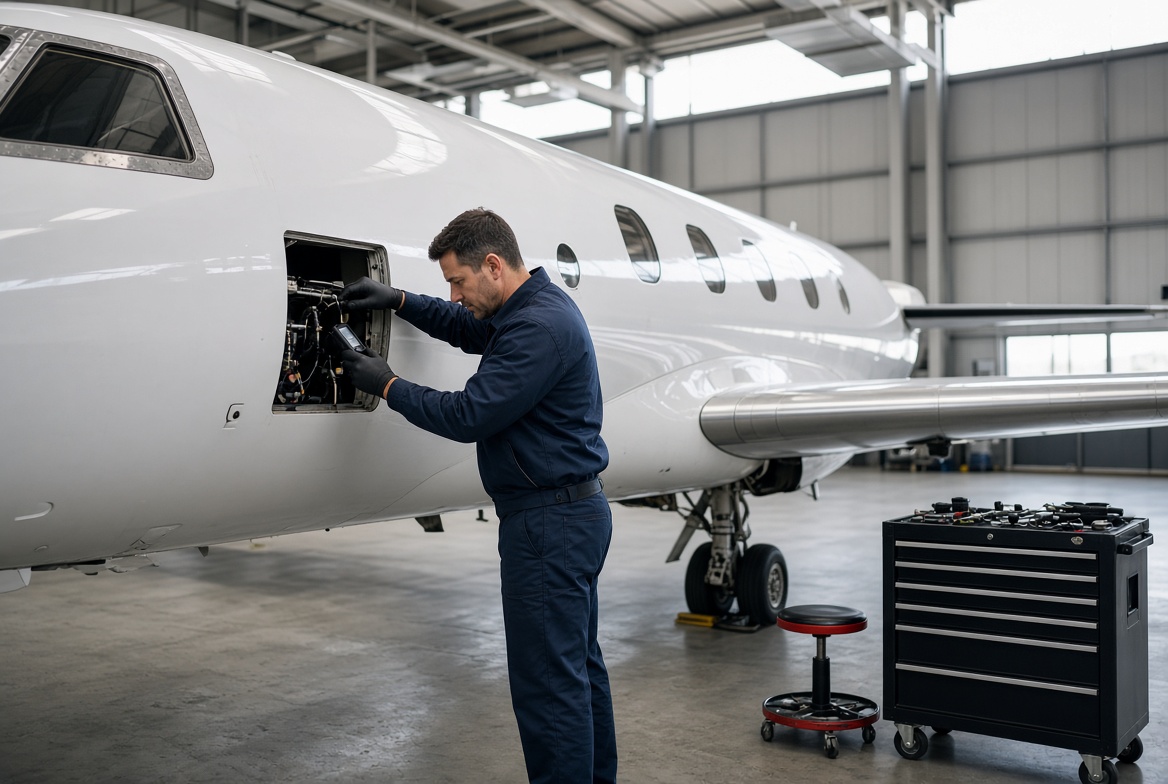
The single most important choice in an aircraft pre-buy inspection is who performs it. Most buyers prefer a facility that:
- Knows the specific make and model, such as a factory-authorized or specialist service center
- Has no relationship with the seller and did not perform the aircraft’s recent maintenance
- Has hangar time available on your schedule, so the aircraft isn’t sitting outside for days
- Delivers a clear written report that sorts findings by category
The inspection location is usually agreed in the LOI, so raise it early. Positioning the aircraft to a specialist shop costs fuel and crew time, but it is normally money well spent.
Scope: How Deep Should the Inspection Go?
Scope is a trade-off between cost, downtime and risk. A light, well-documented aircraft with a recent major inspection may need a lighter scope. An older aircraft, one with gaps in its records or one approaching a major maintenance event usually deserves more. Expensive items such as engines, landing gear and structural inspections are where the extra checks tend to pay for themselves. Your broker and the inspection facility should agree on a written work scope before the aircraft arrives, so nobody is surprised by the bill or the timeline.
Handling Discrepancies Without Killing the Deal
Every pre-buy finds something. What matters is how the findings are sorted:
- Airworthiness items. Discrepancies that affect whether the aircraft is airworthy. Purchase agreements commonly put these on the seller to correct before closing.
- Non-airworthy items. Wear, cosmetic issues or items that are not required for flight. These are usually negotiated: fixed, credited or accepted as-is.
- Records problems. Missing entries or undocumented repairs. Sometimes they can be researched and resolved; sometimes they lower value permanently.
The worst outcome is a buyer who learns too late that the agreement never said who pays for what. The second worst is a discrepancy list used to reopen the whole price. A broker who has been through many inspections keeps the negotiation tied to the findings and the contract, which protects both the price and the relationship. If a finding is serious enough, the right answer is to walk away and keep looking. That is exactly what the inspection is for. For more ways to protect your budget, read how to avoid overpaying for a business jet.
Common Pre-Buy Mistakes
- Skipping the records review because the aircraft “looks great”
- Letting the seller’s own maintenance shop do the inspection
- Leaving inspection scope and discrepancy terms out of the LOI and purchase agreement
- Not attending, or not having a representative present, for key findings and the test flight
- Assuming an engine program transfers without checking the program’s terms
- Rushing technical acceptance to hit a date
If you are new to the process, our step-by-step guide on buying a pre-owned jet puts the inspection in context.
Frequently Asked Questions
Who pays for an aircraft pre-buy inspection?
The buyer usually pays for the inspection itself, plus any positioning flights the agreement assigns to them. The cost of correcting airworthiness discrepancies is commonly assigned to the seller in the purchase agreement, but every deal is negotiated.
How long does a pre-buy inspection take?
It depends on the aircraft, the scope and the facility’s schedule. A light aircraft may take a few days, while a larger jet with a deep scope can take considerably longer. Build in time for parts and for corrections after the findings come in.
Can I use the seller’s mechanic?
You can, but most buyers choose an independent facility with no ties to the seller. Independence is one of the main reasons the inspection exists.
What happens if the inspection finds a major problem?
Under a typical agreement, the buyer can ask for the issue to be fixed, negotiate a price adjustment, or reject the aircraft and recover the deposit according to the contract terms.
Put an Experienced Buyer’s Broker on Your Pre-Buy
An aircraft pre-buy inspection is only as useful as the agreement around it and the people reading the results. Arcadia Jets coordinates the inspection at a qualified facility, reviews the logbooks and damage history, and turns the findings into negotiating leverage so issues are corrected or credited before you close. Explore our aircraft acquisition services or call (888) 660-6511 to talk with an acquisition specialist.